
Japan Tool Workshop Pilgrimage: A Travel Plan for Visiting the Masters
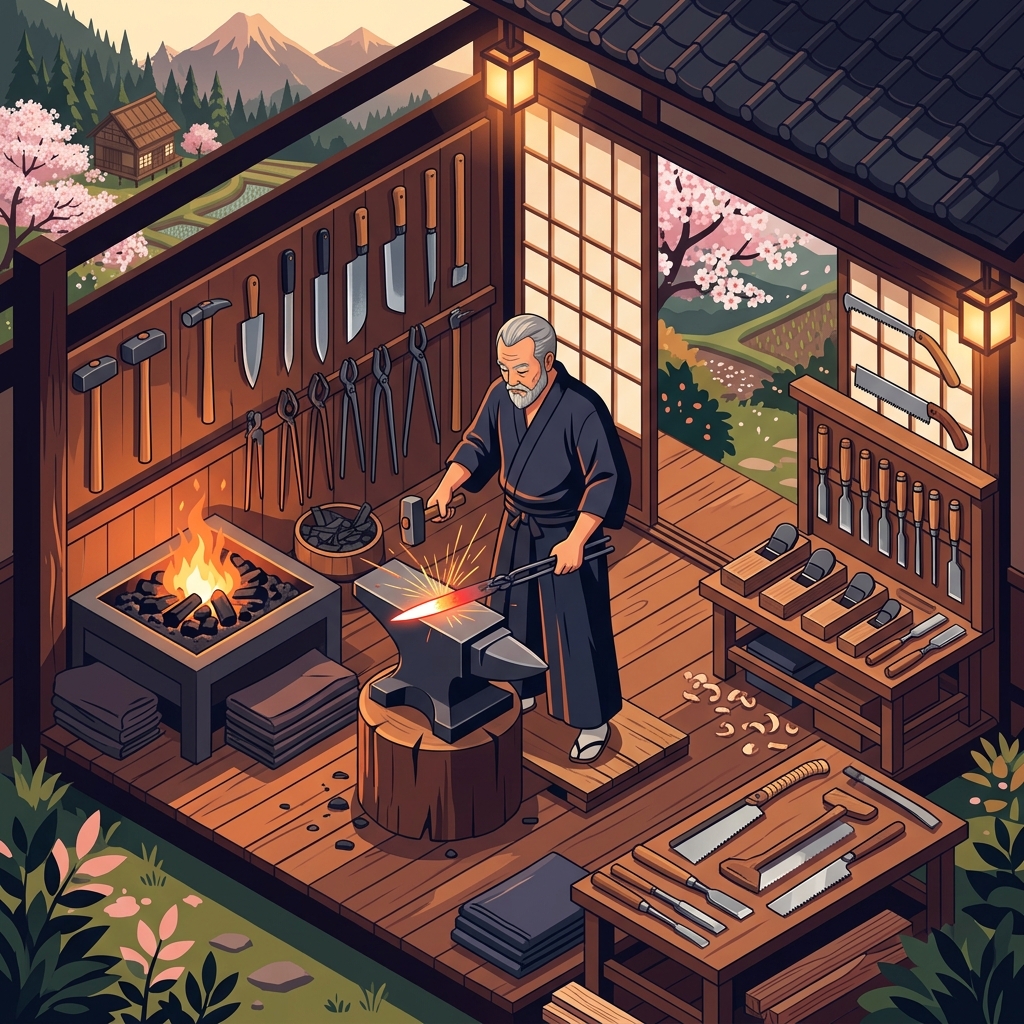
Japan isn't just the birthplace of anime and automotive engineering — it's where centuries-old blacksmithing and woodworking traditions are still alive and practiced daily. From kitchen knives forged in the same fires that once shaped samurai swords, to hand planes tuned to shave wood thinner than paper, the craftsmanship here is unmatched. This is my researched travel plan for visiting the workshops where these tools are born.
Why Japan for Tool Workshops?
Knife Forging
700+ years of bladesmithing tradition. Regions like Sakai, Seki, and Echizen each specialize in distinct techniques inherited from samurai swordmaking.
Woodworking Tools
Miki City produces legendary kanna (planes) and nomi (chisels). Suikoushya in Kyoto teaches these tools to international students.
Metalwork & Hardware
Tsubame-Sanjo in Niigata is the metalwork capital — open factories let you watch artisans forge copperware, cutlery, and precision tools.
Stop 1: The Kansai Region — Knives, Planes, and Joinery
The Kansai region is the foundation of this trip. Within a compact area around Osaka and Kobe, three world-class tool traditions converge: Sakai's kitchen knives, Miki's carpentry tools, and Kyoto's woodworking school.
Sakai, Osaka — Kitchen Knife Capital
📍 30 min from Namba Station via Nankai Line
Sakai produces 90% of Japan's professional kitchen knives. The city's unique "division of labor" system means separate master artisans handle forging, sharpening, and handle-making.
- Sakai City Traditional Crafts Museum: Start here — exhibitions on the history of Sakai Uchihamono, live demonstrations, and a knife shop.
- Wada Shoten: Hands-on workshop where you assemble your own knife handle and learn professional sharpening from a master. Engraving available.
- Factory Walking Tours: Guided tours through the historic district with exclusive access to working forges. Book via Sakai Experience or GetYourGuide.
Miki City, Hyogo — Woodworking Tool Heartland
📍 1 hour from Osaka by train via Kobe
Miki has been making blacksmithed hardware for over 400 years. It's famous for producing the finest kanna (hand planes), nomi (chisels), and nokogiri (saws) in Japan.
- Miki City Hardware Museum (Kanamono Museum): Traditional techniques, artifacts, and occasional live forging demos. Bring an interpreter for deeper context.
- Old-Fashioned Forging Ground: Adjacent to the museum — watch local blacksmiths work red-hot iron into precision tools.
- Miki Hardware Festival (November): First weekend of November — 🎯 time your trip for this. Master toolmakers host stalls, give demonstrations, and sell directly.
Kyoto — Suikoushya Woodworking School
📍 Kyoto city center
Suikoushya is the premier school for learning Japanese hand tools. They provide intensive workshops designed for international students — from sharpening chisels to tuning planes and learning traditional joinery.
- Sharpening Workshops: Multi-day courses on whetstone sharpening for nomi and kanna blades.
- Plane Tuning: Learn the meticulous art of setting up a Japanese hand plane — adjusting the blade, flattening the sole, and achieving paper-thin shavings.
- Traditional Joinery: Practice mortise-and-tenon and other joints used in Japanese temple construction.
Stop 2: The Chubu Region — Swordsmiths and Blade Country
Moving northeast from Kansai into the Chubu heartland, we enter blade country proper — where the legacy of samurai swordmaking lives on through kitchen knives and utility blades.
Seki, Gifu — City of Blades
📍 1 hour north of Nagoya
- Seki Swordsmith Museum: History of swordmaking from feudal Japan to modern cutlery. Hosts live forging shows and sharpening demos.
- Asano Kajiya (Hashima): Full-day immersive workshop where you forge your own knife under a master swordsmith. Uses traditional tamahagane steel techniques.
- Seki Cutlery Festival (October): Annual event with discounted knives, live demonstrations, and factory tours.
Echizen, Fukui — Takefu Knife Village
📍 10 min taxi from Echizen-Takefu Station (Hokuriku Shinkansen)
- Takefu Knife Village: A working collective of artisan blacksmiths under one roof. Free museum entry. Watch forging, grinding, and finishing live.
- Forging Experience (60–90 min): Guided by a real craftsman with interpreter. Forge, shape, and finish a blade. Book in advance — max 3 per session.
- Best on Weekdays: More artisans are working on weekdays. Weekends and holidays may have fewer demonstrations.
Stop 3: Tsubame-Sanjo, Niigata — The Open Factory Capital
The final major stop is Tsubame-Sanjo in Niigata Prefecture — a region with 400+ years of metalwork history. What makes this place special is the open factory culture — working factories literally open their doors so you can watch master artisans on the production floor.
📍 Getting There
Under 2 hours from Tokyo via the Joetsu Shinkansen to Tsubame-Sanjo Station. Easily combined with a Tokyo-based trip.
Workshops to Visit
- Gyokusendo: Famous for tsuiki — hammered copperware. Exquisite tea kettles and sake cups crafted by hand.
- Tadafusa: Hand-forged kitchen knives. Watch the entire production process from steel to finished blade.
- Suwada Open Factory: World-renowned precision nail clippers. Factory shop and observation areas.
Hands-On Experiences
- Sanjo Blacksmith Dojo (Kaji-Dojo): Forge traditional Japanese nails, craft letter openers, or sharpen knives.
- Tsubame Industrial Materials Museum: Try metalworking and craft your own copper tumbler or sake cup.
- Kouba no Saiten (October): Annual festival — 100+ factories open their doors simultaneously. 🎯 The ultimate time to visit.
Stop 4: Tokyo & Surrounds — Swordsmiths and Finishing
The Tokyo area rounds out the pilgrimage with more intimate, appointment-based experiences with individual master swordsmiths.
Hirata Sword Smith — Ome City
Traditional tamahagane steel and tatara techniques.
Forge a kitchen knife using the same steel and methods used for samurai swords. A deeply authentic experience in a rural setting west of Tokyo.
Katanakaji Fusahiro — Saitama
Educational & spiritual focus.
Less about forging, more about understanding the philosophy and spiritual traditions behind Japanese swordmaking. Perfect for context before hands-on experiences.
Proposed 10-Day Itinerary
| Day | Location | Activities |
|---|---|---|
| 1–2 | Osaka / Sakai | Sakai Crafts Museum, Wada Shoten knife workshop, factory walking tour, explore Osaka food scene |
| 3 | Miki City | Hardware Museum, forging ground demos, browse local toolmakers' shops |
| 4–5 | Kyoto | Suikoushya sharpening & plane-tuning workshop, Masahiro Tantojo kogatana forging, explore Kyoto temples |
| 6 | Seki / Hashima | Seki Swordsmith Museum, Asano Kajiya full-day knife forging experience |
| 7 | Echizen, Fukui | Takefu Knife Village — museum, forging experience, shop for custom blades |
| 8–9 | Tsubame-Sanjo | Open factory tours (Gyokusendo, Tadafusa, Suwada), Blacksmith Dojo, copper tumbler crafting |
| 10 | Tokyo (Ome / Saitama) | Hirata Sword Smith tamahagane forging or Katanakaji Fusahiro session, final shopping in Kappabashi |
Practical Tips
⏰ When to Go
- Best: Late October / Early November — aligns with Miki Hardware Festival (Nov) and Tsubame-Sanjo Kouba no Saiten (Oct).
- Also Good: Spring (March–May) for pleasant weather and cherry blossoms at workshop locations.
- Avoid: Golden Week and Obon holidays — many workshops close.
📝 Booking & Etiquette
- Book Early: Small private workshops sell out weeks or months in advance.
- Language: Many workshops are in Japanese only. Check if English interpreters are available. Platforms like Wabunka, Activity Japan, and The Real Japan offer vetted English tours.
- Respect: These are working shops, not tourist attractions. Contact ahead, be punctual, and follow safety instructions.
- Transport: A JR Pass covers most of this route. Rent a car for Miki City and rural areas.
Looking Forward
There's something deeply compelling about watching a craftsman repeat a technique that has been refined across generations. These aren't museums — they're living workshops where tools are still born from fire, steel, and a lifetime of skill. This trip isn't just about buying tools — it's about understanding the philosophy, patience, and precision behind every single one. I can't wait to go.